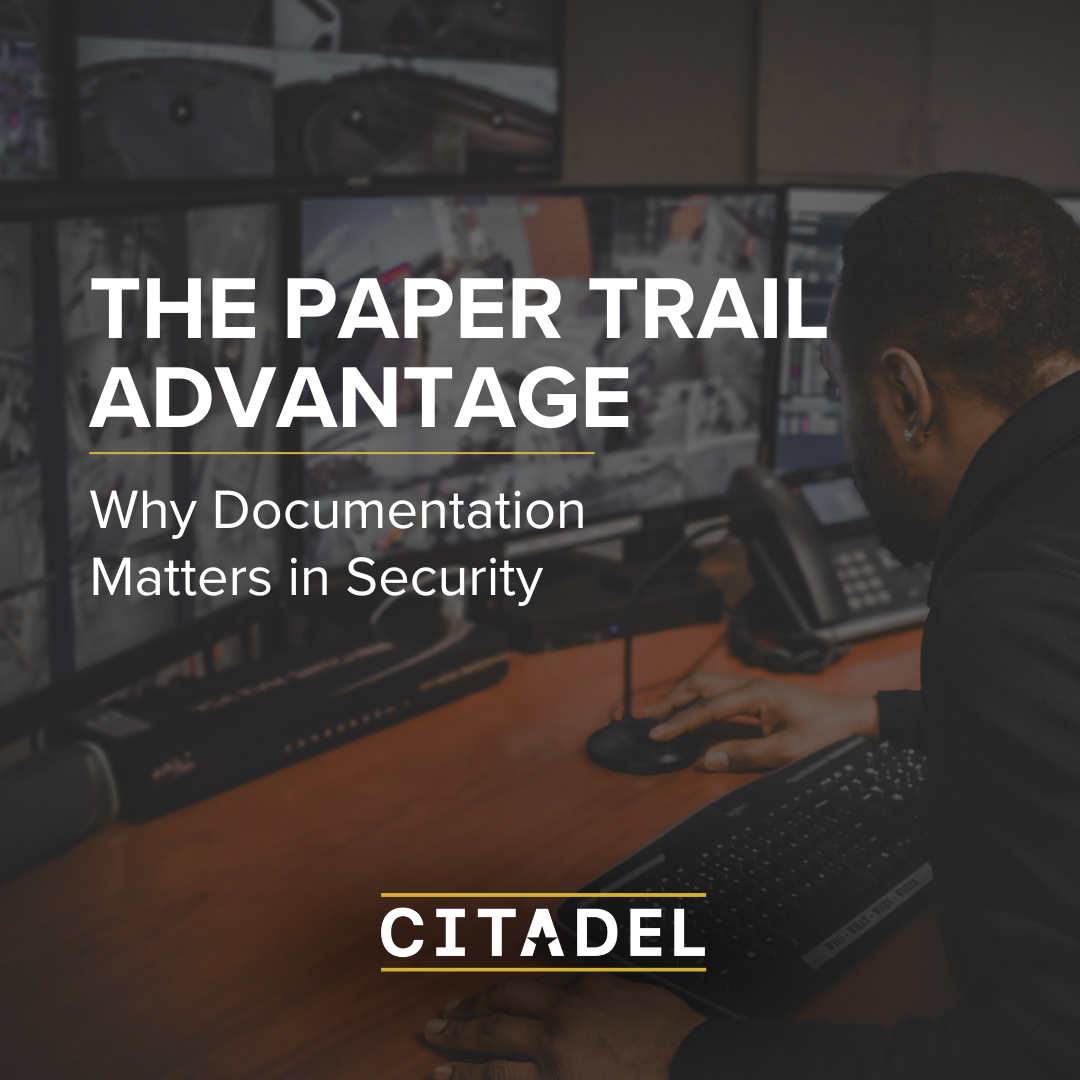
In security, the incident is only half the story. The other half is what you can document, verify, and communicate afterward.
For property teams, facility managers, and asset managers, that “paper trail” can be the difference between a contained issue and a costly escalation. If details are missing or inconsistent, teams often end up reconstructing timelines, chasing information across shifts, and answering questions without a clear record of what happened.
That is why Citadel emphasizes real-time digital reporting as part of modern security coverage. It is not just administrative work. It is operational protection.
Why documentation matters more than most people realize
Weak or inconsistent reporting can create real business risk:
- Slower resolution: When facts are unclear, it takes longer to address tenant concerns or operational disruptions.
- Greater exposure: If a situation escalates, incomplete logs make it harder to demonstrate how the issue was handled.
- Repeat incidents: Without consistent documentation, patterns and vulnerabilities are harder to identify.
When questions arise after an incident, documentation becomes the narrative. Clear, time-stamped records help property teams demonstrate what occurred, how security responded, and what actions were taken.
What the “paper trail” advantage looks like in practice
Real-time reporting upgrades security from simple presence to accountability and visibility.
Citadel’s approach, including TrackTik-enabled reporting in relevant environments, supports:
- Consistent incident documentation across officers and shifts
- Clear timestamps and details that reduce guesswork later
- Verified activity logs and patrol mapping that provide visibility into coverage
- Actionable summaries that help property teams respond and adjust
In commercial buildings, this means property managers have clearer answers when tenants ask how a disturbance was handled or whether an issue is recurring.
In industrial and manufacturing environments, the same discipline supports continuity and control. Accurate logs can clarify what happened at a gate, during a patrol, or after hours, helping teams maintain accountability across multiple shifts and contractors.
A simple standard for evaluating security reporting
If you are evaluating a security provider, reporting quality is one of the fastest ways to separate a professional operation from basic staffing.
Strong reporting is:
- Timely — captured close to the event
- Consistent — structured across officers and shifts
- Specific — including locations, times, and actions taken
- Verifiable — supported by activity logs when applicable
- Actionable — useful for identifying patterns and improving operations
When documentation is reliable and accessible, it reduces uncertainty after incidents and helps protect organizations from unnecessary liability.
Security works best when it is predictable, professional, and provable. The “paper trail” is how organizations gain visibility into what is happening on their property and how issues are addressed.
Clear documentation protects operations, strengthens accountability, and helps ensure that when questions arise, the facts are already in place.
Interested in improving visibility into incidents and coverage without adding friction to daily operations? Contact our team to schedule a time to learn how real-time reporting and professional security coverage can support your property or facility.